
If you’ve lost most or all of your upper teeth, or someone’s told you your jawbone is too thin or too soft for standard dental implants, you’ve probably had a fair few conversations that end with “unfortunately, that won’t work for you.” Frustrating, isn’t it? You want a fixed set of teeth. Not another removable denture that clicks when you talk or needs repositioning every time you eat something firmer than mashed potato.
This is where zygomatic implants come into the conversation. And it’s worth understanding what they actually mean for your daily life before we get into the technical detail of how they’re placed.
What Changes Day-to-Day Once You Have Them
Most people considering this treatment aren’t thinking about bone density or implant angles first. They’re thinking about whether they’ll manage a proper meal with friends without worrying, whether they’ll need to take teeth out at night, and how long the whole process is going to eat into their year.
With a fixed full-arch restoration supported by zygomatic implants, the teeth don’t come out. No soaking. No adhesive. No slipping when you’re mid-sentence. You brush them roughly as you would natural teeth, folded into your normal morning and evening routine. Eating apples, crusty bread, or steak isn’t something you have to plan around anymore, once healing’s complete and your dentist has confirmed everything has settled as it should.
That’s the practical difference people notice first, honestly, far more than the clinical mechanics behind it.
Time and visits involved
One thing patients often ask about at The Ackerman Clinic is how many appointments this involves compared with other implant routes. Zygomatic implants are sometimes chosen specifically because they can, in suitable cases, avoid the extra bone grafting stage that other implant treatments might need when there isn’t enough natural bone in the upper jaw. Grafting itself can add months to a treatment plan. Plus, separate healing time before implants can even go in.
By anchoring further back into the cheekbone (the zygoma) rather than relying on the bone of the upper jaw ridge, this approach can, for the right patient, cut down the number of surgical stages needed. That doesn’t mean it’s a quick fix, though. Easier said than done, in some cases. It’s still a significant procedure with proper healing time. Just a different pathway through treatment, not simply a faster version of the same one.
What They Actually Are, In Plain Terms
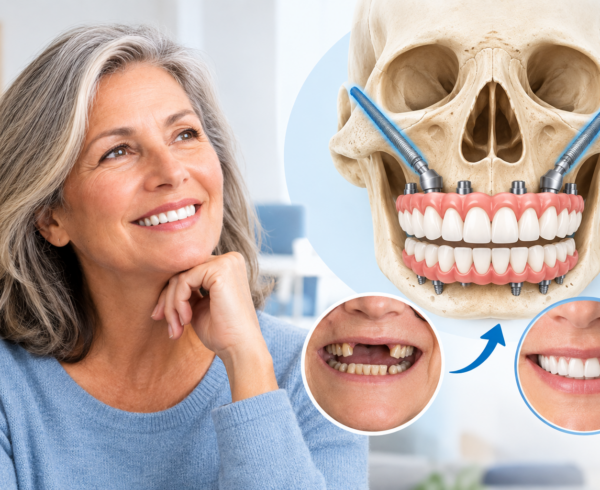
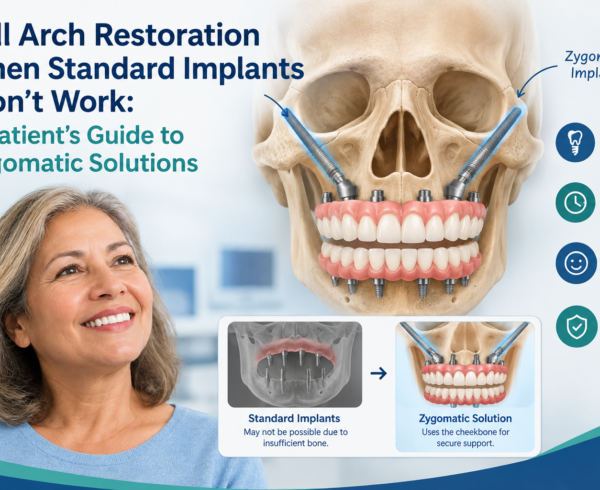
Zygomatic implants are longer than conventional dental implants and are designed to be anchored into the zygomatic bone (the cheekbone) rather than the upper jawbone itself. Conventional implants need a certain amount of healthy, dense bone in the jaw to hold them securely. When the upper jaw has lost significant bone, often after years of missing teeth, gum disease, or denture wear, that bone simply isn’t there anymore in sufficient quantity.
Rather than rebuilding the jawbone with grafts first, which takes time and doesn’t always work, zygomatic implants use the cheekbone as an alternative anchor point. It’s typically denser and more stable. And it sits in a position that can often support a full fixed arch of upper teeth even where there’s considerable bone loss.
Who they’re actually for
This treatment isn’t a general alternative to standard implants for anyone who simply fancies avoiding grafting. It’s specifically considered for people with:
- Severe bone loss in the upper jaw. Often following long-term denture use or tooth loss.
- A history of failed bone grafts, or where grafting’s been assessed as unlikely to succeed.
- A need or wish to avoid the extra healing time that grafting requires.
- A desire for a fixed, non-removable solution rather than another denture.
It’s not typically the starting point for someone with good bone volume and a straightforward missing tooth. In those cases, standard implants usually remain the more sensible route. Zygomatic implants tend to come up specifically when other options have been ruled out, or already tried without success.
What The Process Involves
Because the anchor point is the cheekbone rather than the jaw, placement is a more involved surgical procedure than standard implant placement, generally carried out under sedation or general anaesthetic. A thorough assessment beforehand, usually involving CT scanning, matters here. It maps the bone structure accurately and lets your dentist plan implant positioning with precision.
In many cases, a fixed temporary set of teeth can be fitted on the same day as surgery, or shortly after. That’s part of why this route appeals to people who don’t want an extended stretch without any teeth at all. The final, permanent restoration follows once healing has progressed and your dentist is satisfied that everything has bonded as expected.
Recovery involves some swelling and discomfort, similar to other jaw surgery, and your dentist will talk you through aftercare, diet during healing, and what to expect at each stage. Don’t underestimate what your body needs to do afterwards here, even though it avoids the grafting stage.
Cost and What Influences It
Cost is something people want a straight answer on. Fair enough. It varies according to how many implants are needed, whether one or both sides of the jaw require zygomatic implants, and the type of restoration planned. Because it’s a more complex surgical procedure involving specialist imaging, planning, and often sedation, it typically costs more than standard implant treatment. This gets discussed properly at consultation once your bone structure and needs have been assessed, so you walk away with a clear figure before deciding anything.
Ready to Get Started?
If you’ve been told standard implants or grafting aren’t realistic options for you, that doesn’t necessarily mean a fixed set of teeth is off the table. At The Ackerman Clinic, we assess each case individually, including full imaging and an honest conversation about whether this approach suits your particular situation. We work with people across the region, including those travelling in from near New Milton, who want a clear, realistic picture of what’s involved before committing to anything. Book a consultation with our team to find out where you stand.
FAQs
Are zygomatic implants painful?
As with any jaw surgery, there’s discomfort and swelling afterwards, managed with pain relief and aftercare guidance from your dentist. Most people find it manageable, though recovery does take longer than with standard implants.
How long do zygomatic implants last?
With proper care and regular check-ups, they’re meant to be a long-term solution. Longevity depends on individual healing, oral hygiene, and general health, though. Your dentist will keep an eye on them at review appointments.
Can I have zygomatic implants if I’ve already had a failed bone graft?
This is actually one of the more common reasons people get referred for this treatment. It offers an alternative route when grafting hasn’t worked, or isn’t advisable in the first place.
Will I be without teeth during healing?
Often, a fixed temporary set can be provided on the day of surgery or shortly afterwards, though this depends on individual assessment and your dentist’s recommendation for your case.
Is this treatment suitable for lower jaw tooth loss too?
Zygomatic implants are specifically designed for the upper jaw, anchoring into the cheekbone. Lower jaw cases are usually managed with different implant approaches, which your dentist can talk through with you.
Think zygomatic implants could be right for you? Find out more about zygomatic implants at The Ackerman Clinic.
Related reading: Dental Implants and Is Bone Grafting Always Required for Dental Implants?.