When you lose a permanent tooth or find out that an existing bridge needs replacing, it is completely natural to have concerns about how a replacement will look and feel in your daily life. Many people worry that a dental restoration might look obvious when they smile, or feel like a bulky piece of plastic that shifts around when they speak or chew.
The straightforward answer is that modern dental implants are designed to mimic natural teeth very closely. In fact, most people find that once the healing process is fully complete, they completely forget which tooth is the implant and which is their natural one. However, achieving this natural result requires a careful combination of digital planning, precise manufacturing, and an understanding of how your mouth heals. Knowing exactly how these restorations interact with your lips, gums, and jawbone can help you approach your treatment with complete confidence.
The Visual Aspect: How Do Dental Implants Look?
The primary goal of any dental restoration is to blend in so seamlessly with your remaining teeth that no one else can tell you have had dental work done. Modern technology allows dental laboratories to achieve an incredibly close visual match.
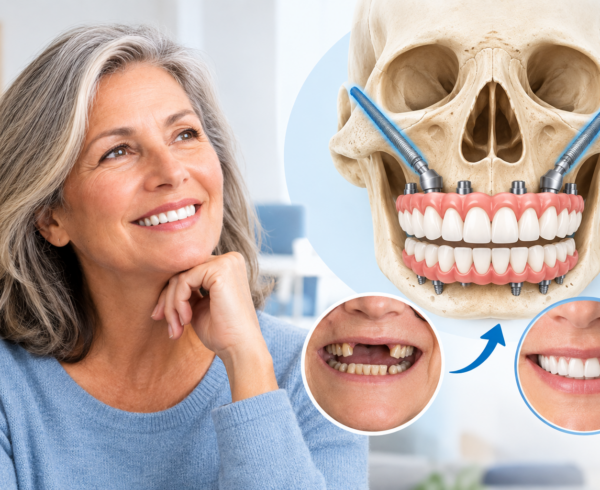
As displayed in the clinical examples above, the final outcome of a well-planned dental restoration is designed to look entirely natural within the smile. The shape, positioning, and shade of the teeth are built to complement the individual’s facial features and adjacent teeth, avoiding an artificial or uniform appearance.
Customised Colour and Shape Matching
Natural teeth are not a single, solid shade of bright white. They possess a complex structure with varying levels of translucency, meaning light travels through the edges slightly differently than it does through the centre. They also have subtle colour gradients, often looking slightly warmer or darker near the gum line.
When your restoration is being planned, your dental team will use detailed shade guides to capture the exact tint, surface texture, and character of your surrounding teeth. This information is passed onto a dental technician who handcrafts the custom porcelain crown. The crown is built layer by layer to replicate these natural imperfections and light-reflecting qualities, ensuring the new tooth does not look flat or out of place.
Emergence from the Gum Line
Another reason older forms of tooth replacement sometimes looked unnatural was the way they sat on top of the gums. Dentures or traditional bridges can occasionally leave a tiny visible gap where they meet the soft tissue, which can create dark shadows.
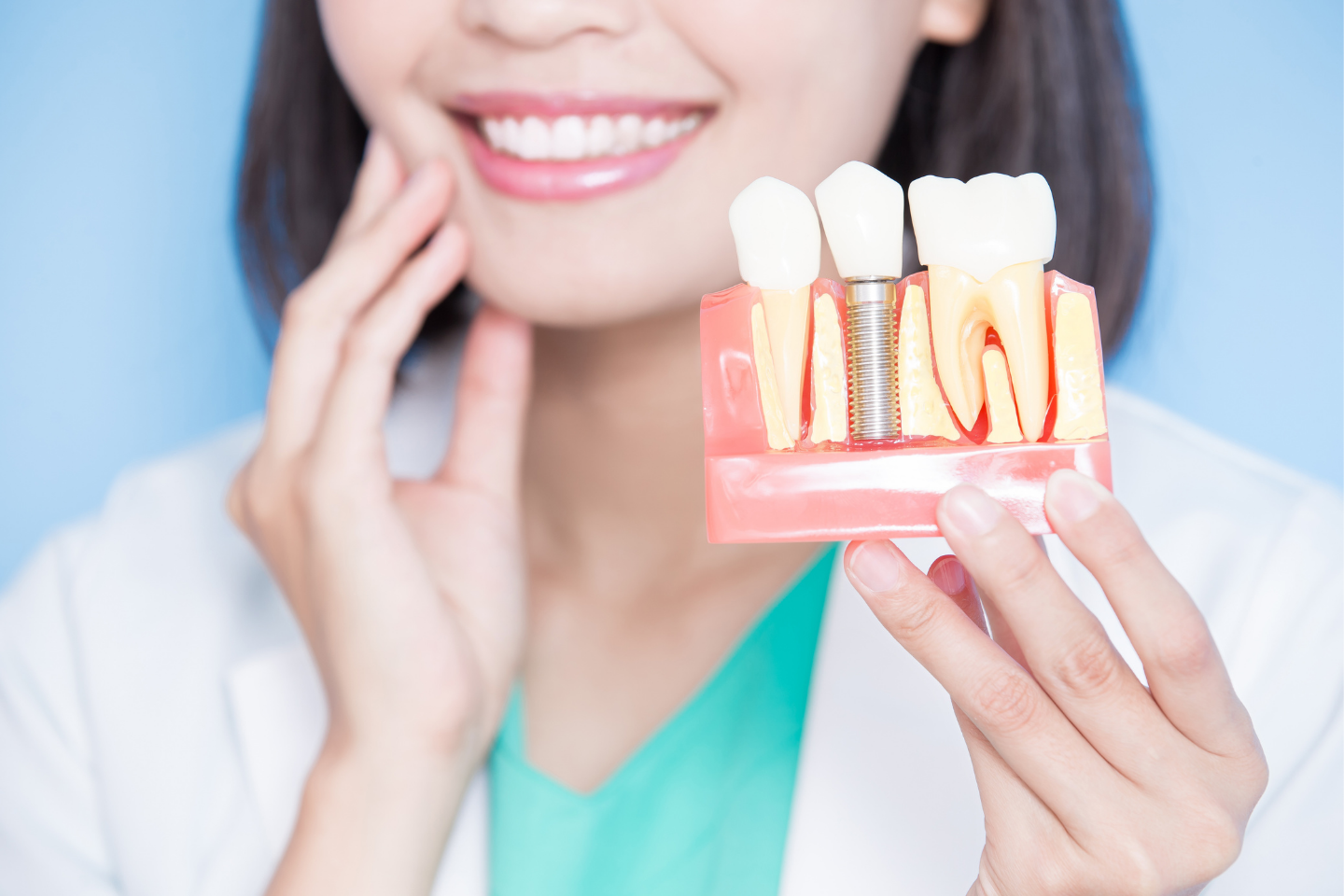
A dental implant resolves this issue because the titanium post sits entirely beneath the gum line, mimicking the natural root structure. When the final porcelain crown is attached, it emerges directly from the gum tissue in the exact same manner as a real tooth. This tight, healthy seal between the gum and the porcelain eliminates unnatural gaps and ensures the borders of the restoration remain completely hidden from view when you talk or laugh.
The Physical Aspect: How Do Dental Implants Feel?
While the appearance of a new tooth is important, how it feels inside your mouth during everyday activities like chewing, speaking, and resting is what truly dictates your comfort.
Stability and Biting Force
Traditional options like removable dentures sit directly on top of the soft gum tissue and rely on suction or small metal clasps to stay in place. Because the gums are naturally flexible, dentures can move or slip slightly when you bite into hard or chewy foods.
An implant feels entirely different because it undergoes a natural process called osseointegration. Over a period of several months, your natural jawbone cells grow tightly around the titanium post, anchoring it permanently into the jaw. Because the post is completely locked into the bone, the replacement tooth provides a solid, immovable foundation. This allows you to chew apples, steak, and crusty bread with the exact same amount of force and stability as you would with your natural teeth, without any fear of the tooth shifting.
The Absence of Nerve Sensation
Although an implant behaves like a real tooth, there is one distinct biological difference in how it feels. Natural teeth are suspended inside the jawbone by a microscopic hammock of tissue called the periodontal ligament. This ligament contains tiny nerve endings that act as a sensory feedback system. When you bite down on something hard, these nerves instantly register the exact amount of pressure and tell your brain how hard to chew.
A dental implant does not have this periodontal ligament or an internal nerve; it is fused directly to the bone. This means the tooth itself cannot feel hot, cold, or subtle pressure. Instead, you perceive the sensation of chewing through the sensory nerves located in the surrounding jawbone and gum tissues. While this difference can feel slightly unusual during the first few weeks after your treatment is completed, your brain adapts very quickly to this new feedback loop.
Key Differences Between Implants and Natural Teeth
To understand the long-term care and behaviour of your new restoration, it helps to look at how it compares to a natural tooth across a few basic categories:
- Susceptibility to Decay: Natural teeth are vulnerable to acid attacks and can develop cavities if plaque builds up. Dental implants are made from titanium and dental porcelain, meaning they can never develop tooth decay or need a root canal.
- The Risk of Gum Disease: While the implant itself cannot decay, the living gum tissue and bone surrounding it can still become infected. If plaque is not cleaned away daily, a condition called peri-implantitis can develop, which can weaken the bone support.
- Movement and Shifting: Natural teeth can move slightly over time in response to pressure or aging. An implant is fused directly to the bone and will remain perfectly stationary, acting as a stable anchor within your jaw.
Factors That Affect the Final Look and Feel
Achieving a result that blends into your mouth naturally relies heavily on your individual health factors and the care taken during the early phases of your treatment.
The Volume and Density of Your Jawbone
For an implant to feel completely solid, there must be enough healthy jawbone to surround the titanium post. If a tooth has been missing for a long time, the bone can naturally thin out. If a post is placed into thin bone without preparation, it may not gain the stability it needs, which can affect how firm it feels when you chew. Utilising detailed 3D imaging allows clinicians to see if you need a preparatory bone graft to rebuild this foundation before surgery begins.
The Health and Shape of Your Gums
The way your gums heal around the new tooth plays a major role in the visual outcome. If a patient has a history of unmanaged gum disease, the gum tissue may have receded, making it harder to create that natural emergence profile. Ensuring your gums are completely healthy and free from inflammation before starting the procedure is the best way to ensure the tissue heals snugly around the new crown.
Planning Your Treatment Locally in Hampshire
Because every person’s mouth has a unique shape and bone structure, achieving a natural look and feel requires highly customised care. If you are exploring your restorative options along the south coast, finding a local practice that focuses on detailed diagnostic mapping is a great way to start.
For residents looking for an independent Dentist in New Milton, your early appointments will focus primarily on checking the structural health of your jaw and gums. At a modern facility like The Ackerman Clinic, the clinical team can use detailed cone-beam computed tomography (CBCT) scans to look directly beneath your smile.
These digital scans provide a clear, three-dimensional view of your bone density and nerve pathways. By planning the exact position, angle, and depth of the titanium post on a digital screen before the procedure takes place, the team can ensure the final restoration fits comfortably within your bite and aligns perfectly with your natural teeth.
Discuss Your Dental Health Options in New Milton
Investing in your dental health is an excellent way to maintain your overall physical well-being and stay comfortable during your daily meals. Understanding the facts about how modern restorations behave allows you to make an informed choice that suits your personal lifestyle.
To learn more about how modern tooth replacement options can support your health, feel free to contact our team today. We offer factual consultations, detailed assessments, and clear advice on keeping your smile stable in a supportive, community setting. You can arrange a personal appointment with us to speak about your options and design a balanced path forward for your oral hygiene.
Ready to learn more? Explore our dental implants treatment at The Ackerman Clinic.
Related reading: Gum Disease Treatment.