
Dave had been putting it off for the best part of two years. A back molar had needed extracting after a failed root canal, and rather than deal with the gap, he’d just… got on with things. He chewed on the other side. He avoided toffee. Then one evening, over dinner with his brother-in-law (who’d had implants done the year before), the conversation turned to it. Dave found himself asking the question he’d been avoiding: how long does this whole thing actually take?
It’s one of the most common questions we hear at The Ackerman Clinic. And it’s a fair one. Dental implants aren’t a same-day fix, and understanding the journey from that first chat to the final crown being fitted can make the whole process feel a lot less daunting. So here’s what that timeline actually looks like, stage by stage.
Stage One: The Initial Consultation
This is where everything starts, and it’s less clinical than people expect. It’s really a conversation. We’ll talk about why you’re considering dental implants, look at your general oral health, and take a look at the area where the tooth (or teeth) is missing.
X-rays or a CT scan are usually taken at this point too. We need to see what’s going on beneath the gum line, particularly the amount and quality of jawbone available. This matters because the implant itself, a small titanium or zirconia post, needs enough bone to sit securely in.
This appointment typically takes 30 to 60 minutes. By the end of it, you should have a reasonably clear picture of whether you’re a suitable candidate and what the treatment plan might involve.
What If There’s Not Enough Bone?
Not everyone has enough bone density straight away, especially if a tooth has been missing for a long time. Bone tends to resorb once it’s no longer stimulated by a tooth root. Sound familiar? It’s more common than you’d think. In these cases, a bone graft may be recommended before implant placement. This adds extra time to the overall process, sometimes several months, but it’s a necessary step to give the implant the best possible foundation.
Stage Two: Treatment Planning
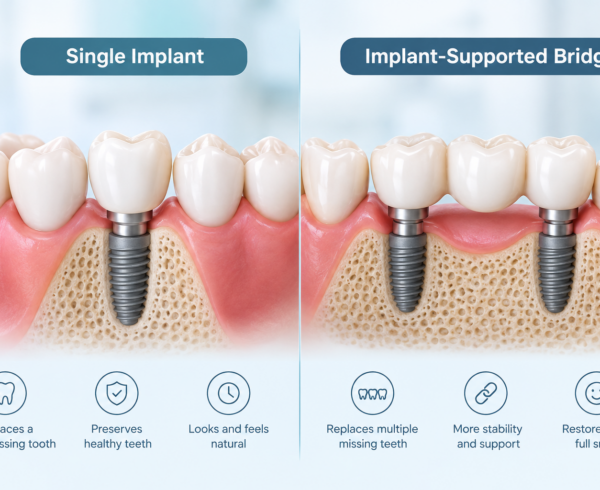
Once we’ve confirmed you’re suitable, the next stage is planning the specifics. This includes deciding on the exact position for the implant, the type of restoration needed (a single crown, a bridge, or something more extensive), and mapping out the timeline based on your own circumstances.
This is also the point where we’ll discuss costs, sedation options if you’re anxious about the procedure, and answer any lingering questions. Some patients want to know everything down to the last detail. Others just want the headline points. Either way is completely fine.
Stage Three: Any Preparatory Work
If extractions, bone grafting, or gum treatment are needed before the implant can go in, this happens here. Healing from a tooth extraction generally takes a few weeks before an implant can be placed in that space, though this varies depending on how fast you heal.
Bone grafts need longer, often three to six months, to properly join with your existing bone. It’s not the most exciting part of the process, admittedly. But it’s what makes the implant placement itself more predictable further down the line.
Stage Four: Placing the Implant
This is the part people tend to picture when they think of dental implants, and it’s usually more straightforward than expected. Under local anaesthetic, the implant post is placed into the jawbone through a small incision in the gum. Sedation is available if you feel anxious about the procedure.
The appointment itself usually takes between 45 minutes and a couple of hours, depending on how many implants are being placed. Afterwards, there’s some swelling and mild discomfort, similar to what you’d feel after a tooth extraction. This settles within a few days for most people.
The Healing Period: Osseointegration
Here’s the part that genuinely can’t be rushed. Once the implant is placed, it needs time to fuse with the jawbone, a process called osseointegration. This typically takes anywhere from three to six months, depending on the location of the implant and your own healing factors.
During this period, you might be given a temporary tooth or denture to wear, particularly if the implant is somewhere visible. It’s a waiting stage. But an important one, since the strength of that bond between bone and implant is what gives the finished tooth its long-term stability.
Stage Five: Fitting the Abutment
Once healing is confirmed, usually with an X-ray to check things have joined properly, a small connector piece called an abutment is attached to the implant. This is what the crown will eventually sit on top of.
In some cases, the abutment is placed at the same time as the implant. In others, it’s a separate short appointment. Either way, the gum needs a couple of weeks to heal around it before we move to the final stage.
Stage Six: The Final Crown
This is the part everyone’s been waiting for. Impressions are taken of the abutment and surrounding teeth, and a custom crown is made to match the shape, size, and colour of your natural teeth. Once ready, it’s fitted and checked for bite and comfort, with small adjustments made if needed.
From consultation to final crown, the entire process for a straightforward single implant, with no bone grafting required, usually takes somewhere between four and eight months. More complex cases can take longer. It’s a process that rewards patience. The result, though, is a replacement tooth that functions and looks like part of your natural smile.
Ready to Get Started?
If you’ve been putting off dealing with a missing tooth the way Dave did, a consultation is a low-pressure way to find out where you stand. The team at The Ackerman Clinic, serving patients in and around New Milton, is happy to talk through your options, answer questions, and help you understand what your own timeline might look like. Get in touch with The Ackerman Clinic to book an initial consultation.
FAQs
How long does the entire dental implant process take from start to finish?
For a single implant without complications, the process generally takes four to eight months. This accounts for healing time after placement and any preparatory work. More complex cases, involving multiple teeth or bone grafting, can take longer.
Is getting a dental implant painful?
Most patients describe the procedure itself as comfortable, since it’s done under local anaesthetic. Afterwards, mild soreness and swelling are common for a few days, similar to recovery after an extraction.
Can I have a tooth missing while I wait for the implant to heal?
Often yes. A temporary crown, bridge, or denture can be fitted so you’re not left with a visible gap during the healing period. This gets discussed during treatment planning.
What happens if my jawbone isn’t strong enough for an implant?
A bone graft may be recommended to build up the area before the implant is placed. This adds time to the overall process but helps create a stable foundation.
Do dental implants need any special care once the crown is fitted?
They’re cared for much like natural teeth, with regular brushing, flossing or interdental cleaning, and routine check-ups at The Ackerman Clinic to keep an eye on the implant and surrounding gum health.
Ready to start your journey? Explore our dental implants treatment or check dental implants cost and pricing.
Related reading: Is Bone Grafting Always Required for Dental Implants? and Dental Extractions.