
Deciding to replace a missing tooth is a significant step toward improving your everyday quality of life. When you are looking for a permanent option that restores your ability to chew comfortably and speak clearly, dental implants are often recommended as the closest match to your natural teeth. Globally, these restorations have a very high track record, with structural success rates usually sitting well above ninety percent.
However, it is vital to remember that receiving an implant is still a form of minor oral surgery. No surgical procedure is completely free from risk. When you are gathering facts to make a choice about your dental health, having a balanced, honest understanding of potential complications is incredibly important. Being aware of what can go wrong helps you spot early warning signs and understand the preventative measures that dental professionals take to protect your mouth throughout your recovery journey.
Risks at a Glance
Complications are uncommon, but knowing what to watch for makes them far easier to catch early. The table below summarises what can go wrong, when it tends to appear, and what is normally done about it.
| Complication | When it appears | Warning signs | How it is managed |
|---|---|---|---|
| Post-operative infection | First days to weeks | Increasing pain, swelling, discharge or a bad taste | Antibiotics and cleaning of the surgical site |
| Osseointegration failure | First 3 to 6 months | The implant feels loose or discomfort persists | Implant removed, site allowed to heal, replacement considered later |
| Nerve irritation | Immediately after surgery | Numbness or tingling in the lip, chin or tongue | Usually settles on its own; persistent cases need prompt review |
| Peri-implantitis | Months to years later | Bleeding gums, deepening pockets, receding tissue | Deep cleaning, laser therapy, removal in advanced cases |
| Screw or crown fracture | Years later | Crown feels loose, clicks, or visibly chips | The component is replaced without disturbing the implant post |
| Sinus involvement (upper jaw) | Days after surgery | One-sided congestion, pressure or discharge | Reviewed with a 3D scan; may need repositioning or a sinus lift |
Early Complications Occurring Shortly After Surgery
Early complications are issues that happen during the initial healing window, which typically covers the first few weeks after the implant post is placed into the jawbone. During this time, your body is working hard to heal the soft gum tissues and begin the process of bone repair.
Post-Operative Infection
Just like any instance where a small incision is made in the skin or gums, there is a minor risk that bacteria can enter the surgical site. A local infection can develop if bacteria gather around the healing tissues during the days immediately following your appointment.
Symptoms of an early post-operative infection include throbbing pain that worsens over time, unexpected swelling that continues past the first four days, a foul taste in your mouth, or a fever. If an infection is caught early, it can usually be resolved completely with a short course of antibiotics and a therapeutic mouthwash prescribed by your dental practitioner.
Poor Early Healing and Osseointegration Failure
The long-term success of your restoration relies entirely on a biological process called osseointegration. This is the stage where your natural bone cells grow tightly around the screw-type titanium post, anchoring it permanently into your jaw.
In some rare instances, the bone fails to fuse properly with the metal surface. This early failure can happen if the implant experiences premature physical pressure before it has stabilised, or if the local blood supply to the bone is restricted. If the bone does not lock the post into place, the implant will become slightly loose or cause a dull ache when touched. When this happens, the post must be removed gently to allow the bone to heal, after which a new placement can often be attempted.
Nerve Irritation and Sensory Alteration
The lower jawbone houses a major nerve pathway called the inferior alveolar nerve, which provides feeling to your lower teeth, chin, and bottom lip. During the planning stages, a clinician must measure the exact depth of your bone to avoid this path.
If an implant post is placed too close to this nerve corridor, it can cause irritation or bruising to the nerve tissue. This complication can result in a sensation of numbness, tingling, or a pins-and-needles feeling in your lip, chin, or gums. In most cases, this sensory alteration is temporary and fades away over a few weeks as the nerve tissue recovers, but precise initial imaging is the primary way to prevent it entirely.
Late Complications Developing Months or Years Later
Late complications are issues that arise long after the implant has successfully fused with your bone and the custom ceramic crown has been fitted. These problems are often tied to everyday wear, changing health factors, or long-term oral hygiene habits.
The clinical diagram above illustrates one of the most common long-term challenges in implant dentistry. As displayed on the right-hand side of the image, the build-up of microscopic bacteria can cause widespread changes beneath the surface. Understanding this process highlights why ongoing maintenance remains so critical for your oral health.
Peri-implantitis and Gum Inflammation
Just as natural teeth can suffer from standard gum disease, dental implants can develop a highly similar condition called peri-implantitis. This happens when soft plaque and hard calculus deposits are allowed to gather along the base of the implant crown and just beneath the gumline.
As shown in the diagram, when bacteria accumulate, they trigger an inflammatory response. On the healthy side, the gum tissue fits snugly against the metal post and the bone is dense. On the affected side, the chronic inflammation causes the gum tissue to pull away, creating a deep pocket. Over time, the bacteria dissolve the essential bone layers that hold the implant post steady. If peri-implantitis is left unmanaged, the structural bone loss can cause the entire restoration to fail, even after years of trouble-free use.
This is more common than most patients expect. A 2022 systematic review in BMC Oral Health by Diaz and colleagues put the prevalence of peri-implantitis at 19.5 per cent of patients and 12.5 per cent of individual implants. Caught early it is treatable, and laser therapy for inflamed gum tissue can disinfect the pocket without cutting the gum away. The same bacteria drive ordinary gum disease, so anyone with a history of periodontal disease should expect closer monitoring after implant treatment.
Mechanical Wear and Component Damage
While the titanium post beneath your gums is incredibly strong, the visible parts of your restoration face constant physical pressure from everyday biting and chewing. Over several years, the tiny internal screw that connects the custom crown to the underlying post can occasionally work its way loose.
This mechanical loosening can make the visible tooth feel slightly wobbly when you eat. In most situations, this is a simple issue to correct; your practitioner can simply remove the crown, inspect the internal parts, and tighten or replace the connecting screw. Less frequently, the ceramic crown itself can chip or crack under heavy forces, requiring a standard repair or replacement at the dental clinic.
Sinus Complications in the Upper Jaw
The upper jaw sits directly beneath your maxillary sinuses, which are hollow, air-filled spaces located behind your cheekbones. The roots of your natural upper back teeth often sit very close to the floor of these sinus cavities.
When an implant is planned for the upper jaw, there must be enough vertical bone height to house the post without puncturing the delicate membrane lining the sinus. If an implant inadvertently extends into the sinus space, it can cause irritation, localised swelling, or sinus infections. If a patient naturally has very thin bone in this region, a preparatory step called a sinus lift is usually performed to lift the sinus floor and add supporting bone before placement.
Who is at a Higher Risk of Dental Implant Complications?
While complications can happen to anyone, certain daily habits and systemic health factors noticeably increase the statistical chance of facing a problem:
- Tobacco Use and Smoking: Smoking restricts the tiny blood vessels in your gums, significantly reducing the supply of oxygen and nutrients needed for bone repair and fighting off local bacteria.
- Unmanaged Chronic Conditions: Systemic illnesses such as unmanaged type 2 diabetes slow down the body’s natural healing responses, making it harder for the bone to fuse with the post.
- Teeth Grinding (Bruxism): Subconsciously clenching or grinding your teeth puts excessive, repetitive physical stress on a healing implant, which can disrupt the early stages of bone attachment.
It helps to put these risks in proportion. A systematic review and meta-analysis by Howe, Keys and Richards, published in the Journal of Dentistry in 2019, pooled the long-term data and found a ten year survival rate of 96.4 per cent at implant level. When the same authors reran the analysis to account for patients lost to follow-up, the figure came out at 93.2 per cent. In other words, somewhere between three and seven implants in every hundred are likely to be lost within a decade, and the risk rises with age. Survival is not the same as being problem free, and it is the reason follow-up appointments matter as much as the surgery itself.
What Happens if an Implant Fails?
This is the question most people actually want answered, and it is rarely addressed directly. A failed implant is not a permanent dead end.
Removing the implant
If an implant has not fused, removal is usually simpler than the original placement. Because the bone never bonded to it, the post can often be taken out under local anaesthetic with little disturbance to the surrounding tissue.
Healing before a second attempt
The site is then left to heal, typically for two to three months. Rushing a replacement into a site that has not recovered is one of the more avoidable causes of a second failure. Our treatment timeline guide sets out the healing stages in full.
Replacing it
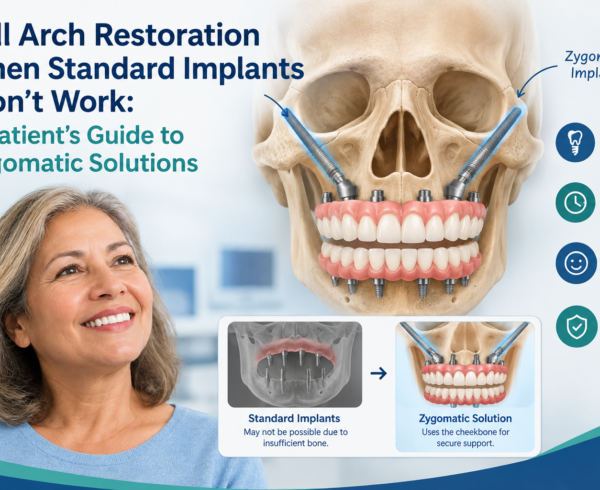
Most patients can have a second implant placed successfully. Where the failure has cost you bone volume, a bone graft may be needed first. If the upper jaw has lost too much bone to rebuild, implants anchored into the cheekbone can bypass the grafted area entirely, which is often the route after a failed conventional implant in the back of the upper jaw.
Planning Your Treatment Safely in Hampshire
To keep the risk of these complications as low as possible, the entire treatment path must be built on a foundation of detailed physical evaluation and clear communication. If you are exploring your restorative options along the south coast, finding a local practice that focuses on precise diagnostics is an excellent way to start your journey.
For instance, if you are looking for an independent Dentist in New Milton, your initial consultation will focus heavily on checking the health of your remaining teeth and the stability of your gums. At a modern facility like The Ackerman Clinic, the team can utilise advanced 3D cone-beam computed tomography (CBCT) scans to look directly beneath the surface of your smile.
These digital scans allow the clinician to see the exact three-dimensional shape of your jawbone, measure its density, and locate the precise path of local nerves and sinus floors. By mapping out the exact entry angle and depth on a digital screen before any physical procedure takes place, the clinical team can plan around your natural anatomy with high accuracy, ensuring your path to a complete smile is straightforward and safe.
Frequently Asked Questions
How common is dental implant failure?
Pooled long-term data suggests roughly 96.4 per cent of implants are still in place after ten years, falling to about 93.2 per cent once patients lost to follow-up are accounted for (Howe, Keys and Richards, Journal of Dentistry, 2019). That puts failure somewhere between three and seven implants in every hundred over a decade. Risk rises with age, smoking and uncontrolled medical conditions.
Is nerve damage from a dental implant permanent?
Usually not. Most altered sensation after implant surgery is bruising or pressure on the nerve and settles over weeks or months. Numbness that is still present after several months needs urgent review, because early intervention gives the best chance of recovery.
Can a failed dental implant be replaced?
In most cases, yes. The failed post is removed, the site is left to heal for around two to three months, and a new implant is placed. Where bone has been lost, a graft or a cheekbone-anchored implant may be needed first.
What are the first warning signs of peri-implantitis?
Bleeding when you brush around the implant is usually the earliest sign, followed by tenderness, swelling and gum tissue that starts to recede. Because it is often painless at first, it is frequently picked up at a routine check rather than by the patient.
Does smoking really affect dental implants?
Yes, and the effect is significant. Smoking restricts blood flow to healing bone and gum tissue, which slows osseointegration and raises the risk of both early failure and later peri-implantitis. Stopping before surgery and through the healing period measurably improves the odds.
Are dental implants safe if I have diabetes?
Well-controlled diabetes is not a barrier to implant treatment. Poorly controlled blood glucose is the problem, because it impairs healing and increases infection risk. Your clinician will usually want recent HbA1c readings before planning surgery.
Discuss Your Restorative Options in New Milton
Taking care of your mouth is one of the best investments you can make for your general health and everyday comfort. While it is important to be aware of the potential risks, choosing a structured, well-planned treatment path means you can approach your rehabilitation with complete peace of mind.
To explore how modern restorative options can support your physical well-being, feel free to contact our team today. We provide factual clinical assessments, thorough health tracking, and practical advice on keeping your smile healthy in a relaxed, community environment. You can schedule a comprehensive consultation with us to talk through your physical goals and establish a balanced path forward.
Related reading: Dental Implants and Bleeding gums: why you should never ignore this warning sign.